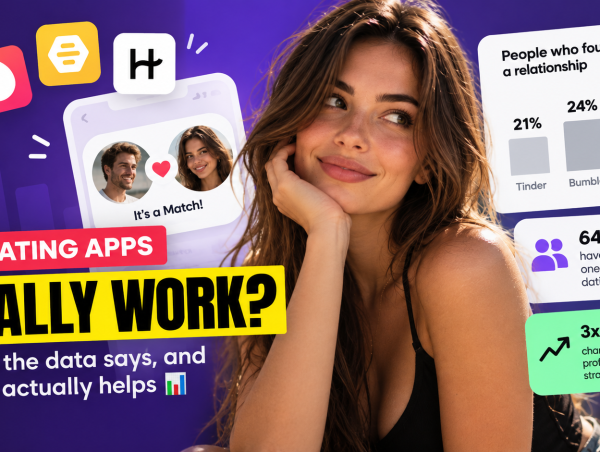
Our guide to dating apps for a serious relationship ends with three numbers from Pew Research Center: three in ten U.S. adults have used a dating site or app, about half of users call the experience positive, and one in ten partnered adults met their partner on one.
Those numbers can be read as good news or bad news. This article looks at what they mean, what the same research says about why the experience differs so much from person to person, and which habits line up with better results.
The numbers
| What Pew asked U.S. adults | Result |
| Have ever used a dating site or app | 30% |
| Users who call their experience positive overall | 53% |
| Partnered adults who met their partner on one | 1 in 10 |
| The same, among partnered adults under 30 | About 1 in 5 |
Source: Pew Research Center, published 2023.
How to read “one in ten”
One in ten sounds small until you look at who is being counted. The figure covers all partnered adults, including couples who got together decades before these apps existed. Among partnered adults under 30, the share is about one in five.
So the fair summary is that apps are one of the common ways couples meet now, and they are far from the only one. Trying one is reasonable, and putting your whole social life into one is not.
Why half the users are not happy
In the same survey, the positive and negative groups were nearly equal in size, and the split tracked gender closely. Women were much more likely to say they felt overwhelmed by the number of messages they got. Men were much more likely to say they felt insecure about how few they received.
Those two complaints come from the same imbalance. One side has too many conversations to answer properly, and the other has too few to choose from, so both end up frustrated with the same app.
About half of users also said they had come across someone they believed was trying to scam them. Running into this is common enough that it should not make you feel foolish, and it is the reason for the caution in the rest of this series.
What the research does not tell you
Pew measured experiences. It did not follow people over time to see which habits led to a relationship, and we will not pretend it did. Nobody has a proven formula.
What we can do is look at where the frustration comes from and at the data apps have published about their own users, and see which habits follow from both.
What the people it works for tend to do
They state their goal
Tinder, Bumble and Hinge all added a field for what you are looking for. Filling it in, and saying it again in the first line of the bio, is the cheapest filter there is. It costs you matches with people who wanted something else, and you were better off without those.
They use one or two apps
Five apps means five thin profiles and a hundred half-finished chats. One or two means you can answer the people who write to you, and unanswered messages are what users on both sides complain about most.
They reply the same day
Hinge has reported that matches where the first message got a reply within 24 hours were 72% more likely to lead to a date. That number comes from one app’s own data, so treat it as a direction more than a law. Either way, slow replies let interest fade.
They like fewer profiles and read more of them
If you get few replies, sending more likes does not help much. Better ones do: a comment on a prompt, or a message about something in the profile. If you get too many, be stricter about who you match with so you can answer the ones you keep.
They move to a date within a week or so
Long chats build a picture that a real person then has to compete with. A short coffee after several days of steady conversation tells you more than another month of messages.
They change one thing at a time
When nothing is working, swap the first photo and wait a week. Then the first line of the bio. If you change everything at once, you learn nothing about what made the difference.
They take breaks
Checking for twenty minutes in the evening is enough. A week off when it stops being enjoyable is fine too. The app will still be there, and you will write better messages when you are not worn out.
Should you pay?
Roughly a third of users in Pew’s survey said they had paid for a dating site or app at some point. Paying mostly buys volume and visibility: more likes, seeing who liked you, being shown sooner.
That helps only when the profile already works and the free limits are what is holding you back. If the free version brings no matches, fix the photos and the bio first. A subscription shows a weak profile to more people, and the profile is still weak.
Is it worth it?
For most people who want a relationship, yes, as one channel among several. Expect quiet weeks, expect most matches to go nowhere, and judge the app by whether it gets you a few real conversations a month. A long match list is not what you are after.
Keep meeting people the old ways too. Friends, classes, clubs and work still account for most couples, and the two approaches do not compete.
Where to start
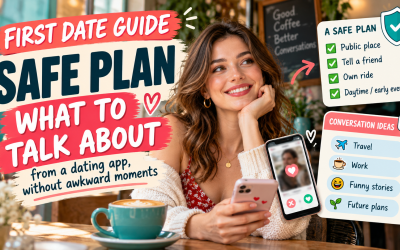
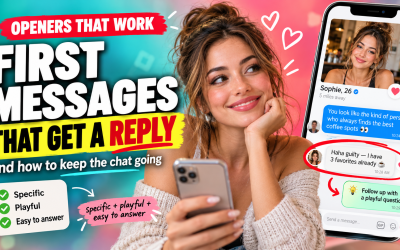
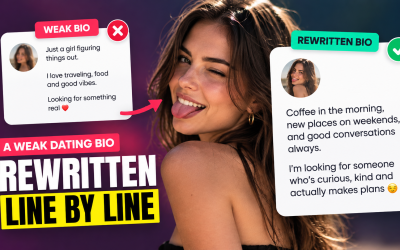
If you are setting up from scratch, go in order: check the app before you join, fix the bio, write better first messages and plan a safe first date.
Still choosing between Tinder, Bumble and Hinge? The full guide compares them.
App features, limits and prices change often and can vary by region. EspiaAqui is not affiliated with any app mentioned here, and no app can guarantee a match or a relationship. This article is for informational purposes only.