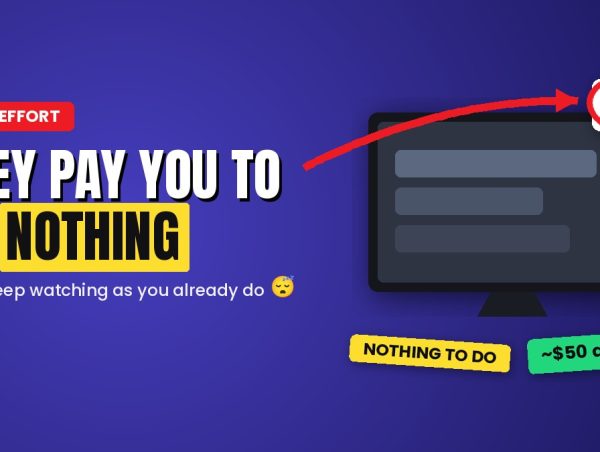
Method #6 on our list of ways Americans get paid to watch videos is the only one with no task attached. You install a meter, you carry on watching exactly as before, and a measurement company pays you for the data.
The money is small — reported figures land around $50 a year, paid in gift cards and periodic incentives. The reason it belongs on the list anyway is that it costs you zero hours, so it stacks underneath every other method without competing for your time.
How measurement panels work
Ratings companies need to know what the country actually watches. They cannot ask, because people misremember. So they recruit a statistically representative sample of households and measure directly.
- You are recruited — by mail, phone or an online screener — and answer a long household questionnaire.
- If your household fills a gap in their sample, a technician installs meters on your televisions, or you install an app on phones and computers.
- Household members identify themselves when they start watching, usually with a button press.
- You receive small incentives: an upfront payment, periodic gift cards, sometimes a monthly top-up.
There is no content to consume and nothing to score. The data is the deliverable.
Why you cannot simply sign up
This is what separates it from everything else on our list. Every other method has an open door — you apply, you qualify, you work. Measurement panels do not recruit volunteers, because a sample of people who wanted to join would not represent the country.
They go looking for specific households to fill specific gaps. You can register your interest, but you cannot apply your way in.
The household makeup panels actually chase
Which raises the useful question: who gets chased?
Not the household that watches the most. Panels are built to mirror the population, so what they need is whatever their current sample is short of. In practice, these categories are chronically under-represented and therefore in demand:
- Households that have cut the cord entirely — streaming only, no cable or satellite. Measurement built around traditional TV has struggled to recruit these for years.
- Young adult households, especially single-occupant and shared flats under 35, which are the hardest demographic in the industry to retain.
- Multilingual and multi-generational households, which are consistently undersampled.
- Rural and small-market addresses. Sampling is geographic, and thinly populated markets need proportionally more recruits.
- Households with children at home, which advertisers pay a premium to understand.
If you recognise your household in that list, registering your interest is genuinely worth the ten minutes. If you are a cable-subscribing suburban couple, that profile is already well covered and you may never hear back — not a judgement, just arithmetic.
Three things worth knowing before you join
🚩 It is a household decision, not a personal one
Everyone under the roof is being measured and everyone has to cooperate with the button presses. Agreeing on behalf of flatmates who find it intrusive goes badly.
🚩 Compliance is the whole job
The incentive assumes you keep identifying yourself. Households that stop are dropped, and the ongoing payments stop with them.
🚩 Anything asking you to pay is not a panel
Legitimate measurement companies recruit you and pay you. There is no fee, no kit to purchase and no “certification.” Recruitment imitating a ratings company is a known scam format — verify any approach through the company’s own site before sharing household details.
What to do this week
- Register interest directly on the measurement company’s own website — never through a link in an unsolicited message.
- Complete the household questionnaire accurately. Exaggerating to seem more attractive is pointless here; being unusual is the qualification, not being heavy-viewing.
- Then forget about it. Recruitment runs on their schedule, and contact may come months later or not at all.
Is it worth it?
As a standalone income, no — and anyone presenting it as one is misleading you. As a layer that runs underneath everything else at zero time cost, it is the only method on the list that genuinely adds money without subtracting hours.
Treat it as the floor and build on top. The practical base for most people is website tests at $10 per 20 minutes, with research interviews as the occasional upside.
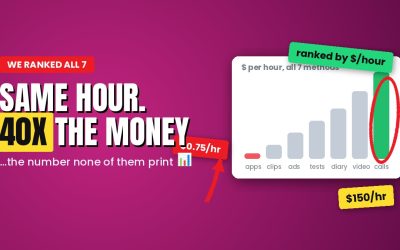
Where everything lands side by side: all seven methods ranked by hourly pay.
Rates shown are published or self-reported figures and are not a guarantee of earnings. This article is for informational purposes only and does not constitute financial advice.