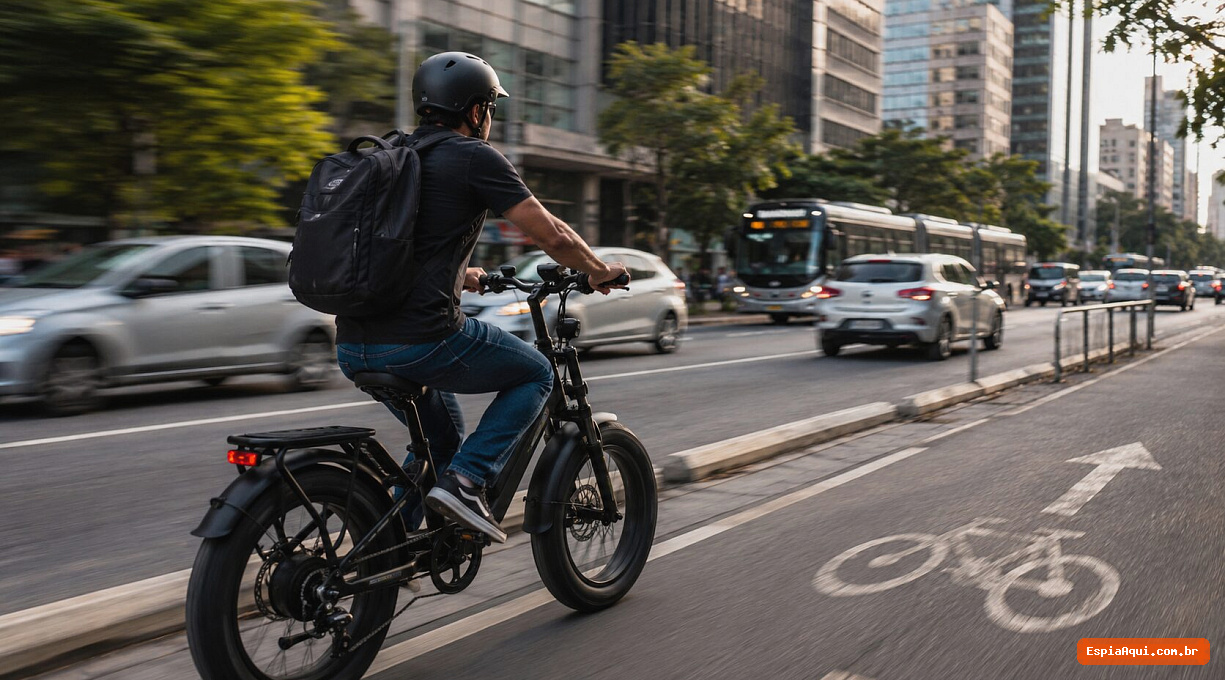
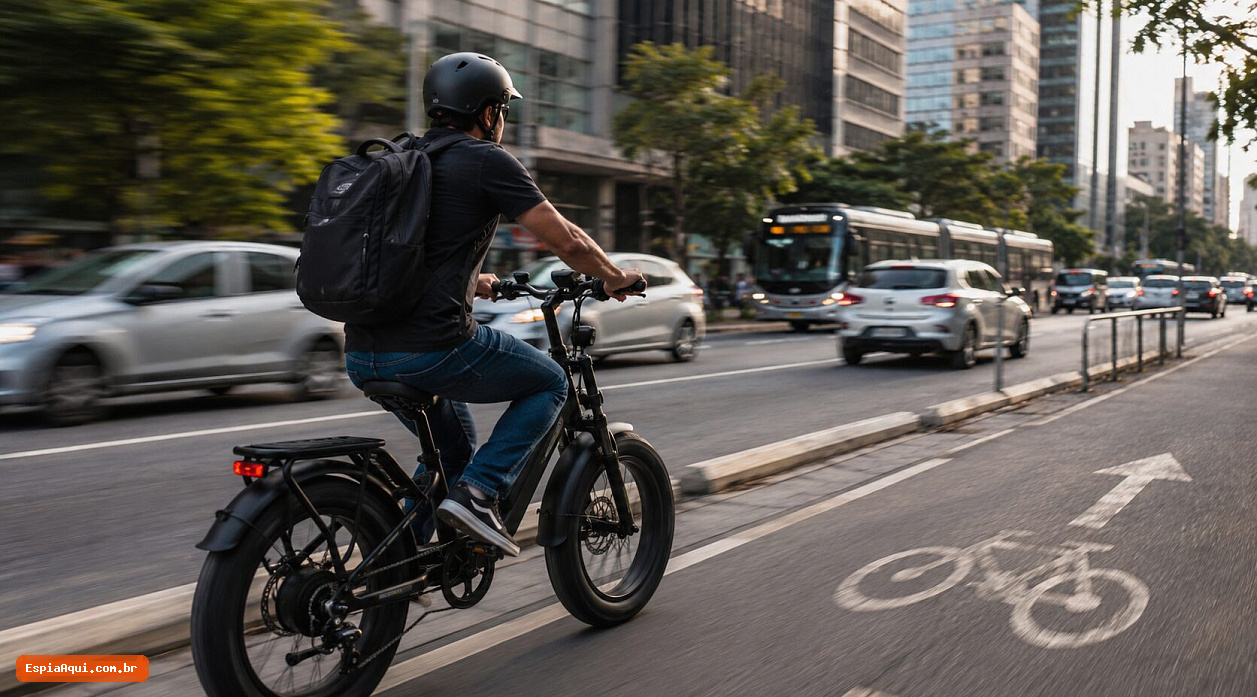
Electric bicycles are rapidly gaining ground on Brazil’s city streets, but their spread poses significant challenges for traffic enforcement. According to Aliança Bike, more than 850,000 e-bikes and light electric vehicles are already on the road in the country, an increase that has led to conflicts involving pedestrians, cyclists and drivers.
Accidents and conflicts on the streets
In Curitiba, Paraná’s Traffic Police Battalion (BPTran) has noticed an increase in the number of e-bikes and self-propelled personal mobility devices, such as scooters. Between 2024 and the first half of 2026, 419 accidents involving e-bikes were recorded in the state capital: 165 in 2024, 169 in 2025 and 85 in the first six months of this year.
The problem shows up in other states as well. Seamstress Amanda Braga, 34, was hit by an e-bike traveling the wrong way in Vila Velha, Espírito Santo. She fractured her tibia, needed surgery, spent about three months on crutches and went through hospitalization and physical therapy.
Different classifications and rules
Brazilian law distinguishes among electric bicycles, self-propelled mobility devices and mopeds, each with specific rules. An e-bike as regulated by the National Traffic Council (Contran) must have an auxiliary motor of up to 1,000 watts, pedal assist and a maximum motor-assisted speed of 32 km/h, and may not have a hand throttle.
Devices that run on a throttle, with no need to pedal, may fall into another category. Mopeds are two- or three-wheeled vehicles with an electric or combustion engine and a top speed of 50 km/h, and are subject to registration, licensing, license plates and a driver’s license requirement.
Self-propelled devices, such as scooters, may have up to 1,000 watts and a top speed of 32 km/h, under federal regulations.
Enforcement and safety challenges
One of the main obstacles to oversight is that e-bikes that comply with the rules have no license plate, registration or licensing, which prevents violations from being automatically linked to the vehicle. This forces enforcement to rely on in-person stops, since conventional speed cameras do not identify these riders.
Illegal modifications to the equipment, such as increased power or speed, are difficult to detect from a distance. The absence of a requirement for a National Driver’s License (CNH) also means riders may be on the road without adequate knowledge of traffic rules.
BPTran reported frequent problems such as riding in prohibited areas, speeding, disregarding signage, carrying passengers improperly, riding without mandatory equipment, traveling the wrong way and running red lights.
Measures and challenges for cities
Experts such as researcher José Carlos Assunção Belotto of the Federal University of Paraná (UFPR) point out that the growth of e-bikes requires investment in education, enforcement and infrastructure to prevent accidents and conflicts.
In São Paulo, new rules implemented on August 28, 2026, limit e-bike speeds to 20 km/h on bike paths and bike lanes, and to 6 km/h in areas shared with pedestrians. Riding on certain roads has also been restricted. City Hall said initial enforcement will focus on educational efforts, with the installation of speed display panels that will not function as speed cameras.
Production and popularity on the rise
The e-bike market continues to expand. In the first half of 2026, production at the Manaus Industrial Hub reached 34,100 units, up 87.2% from the same period in 2025, according to data from the Brazilian Association of Motorcycle, Moped, Scooter, Bicycle and Similar Manufacturers (Abraciclo). The category already accounts for 20.9% of total bicycle production in the region.
The affordable price of these bikes is also driving demand. An e-bike can be purchased for as little as R$ 2,000, with maintenance and charging considered inexpensive.