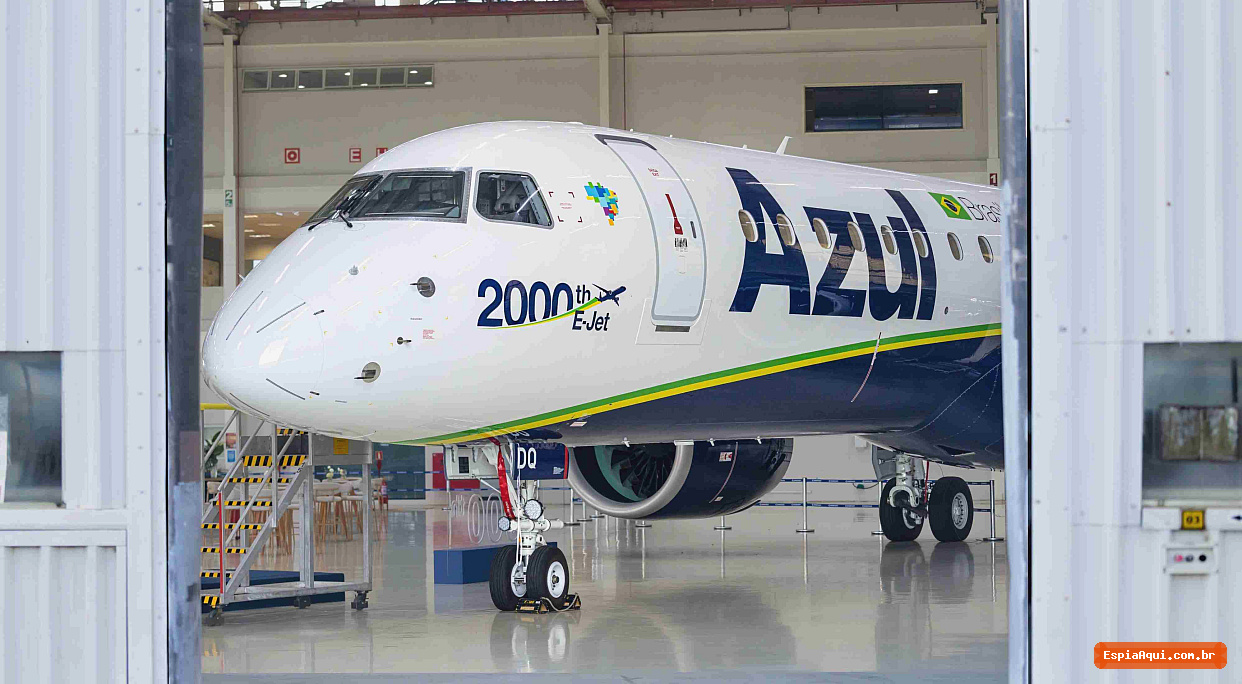
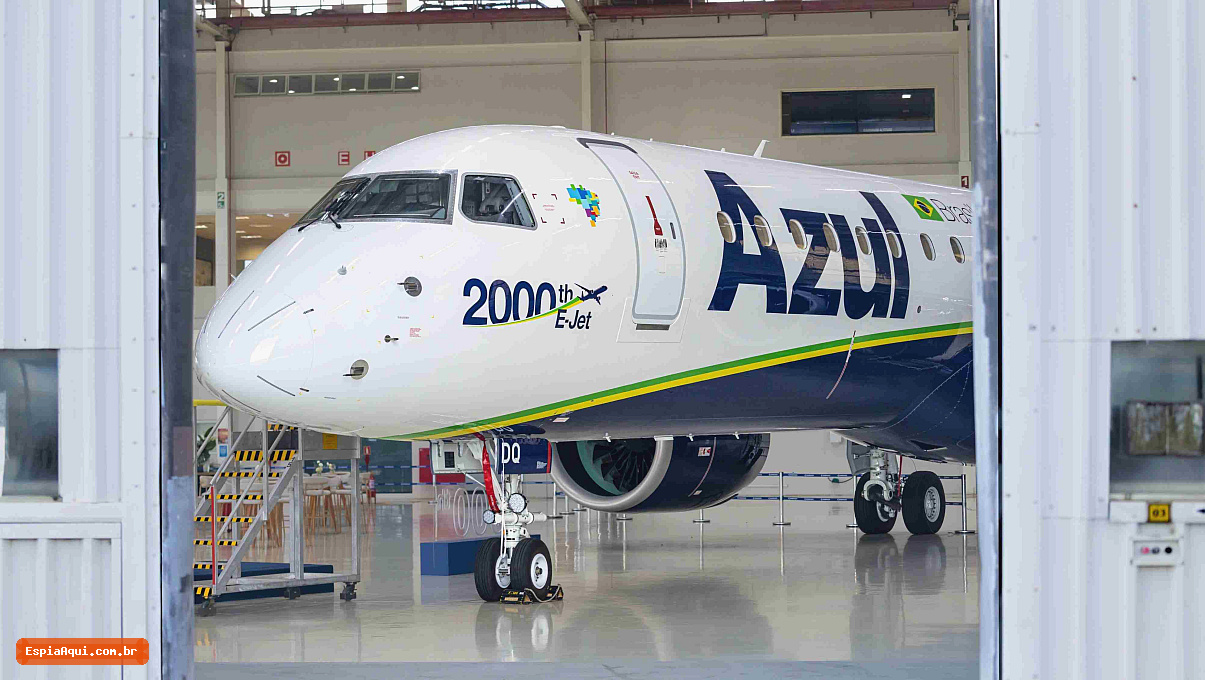
Embraer, the Brazilian manufacturer based in São José dos Campos, cemented its position as the world’s third-largest commercial jet family by delivering its 2,000th E-Jet to Azul in early September 2026. The company dominates the segment of aircraft with up to 150 seats, taking advantage of the production crisis and delays at Boeing and Airbus to expand its global order book.
While the American and European giants face waiting lists for new aircraft that can stretch up to ten years, Embraer can deliver E2-series jets in under two years. This reflects a shift in the airline industry driven by the pandemic, which led carriers to prioritize smaller, more versatile aircraft.
Growth and production challenges
Embraer’s performance also benefited from its competitors’ problems: Boeing faced safety-related crises, and Airbus struggled with production bottlenecks. As a result, the Brazilian manufacturer built a record order backlog of US$ 34.5 billion in July 2026, and its shares have risen tenfold since 2021.
The E-Jets are the highlight of the portfolio, having carried more than 2.8 billion passengers with 90 airlines in 60 countries. In the United States, the E175 stands out in regional aviation as the only model that complies with local pilot labor rules, securing it near-exclusivity in that market.
Military presence and innovation
Beyond the commercial segment, Embraer has a significant role in defense with the KC-390 Millennium cargo aircraft, chosen by 13 countries, including Colombia. The company is also investing in future mobility solutions, with its subsidiary Eve launching a “flying car” that completed successful horizontal flights in August 2026.
Constraints and future plans
Despite strong sales, Embraer faces global supply chain bottlenecks that affect production. The main constraint is an engine shortage, which is expected to limit commercial jet deliveries to about 85 units in 2026, even though it has capacity to build more than 100 aircraft. Other problems include shortages of electronic components and high-temperature forged parts, and difficulty hiring skilled labor.
The market also suffers from volatile fuel prices and contracts signed during the pandemic with thin margins. The company is considering developing a larger single-aisle jet to compete with Boeing and Airbus aircraft of up to 220 seats, a project estimated at around US$ 10 billion that would depend on strategic partners.
Although Airbus’s CEO has expressed caution about Embraer’s attempt to break the duopoly, the Brazilian leadership remains pragmatic. In the short term, the company is focusing on markets such as India, where it is considering setting up a local production line in exchange for guarantees of at least 200 orders across the civil and military segments.