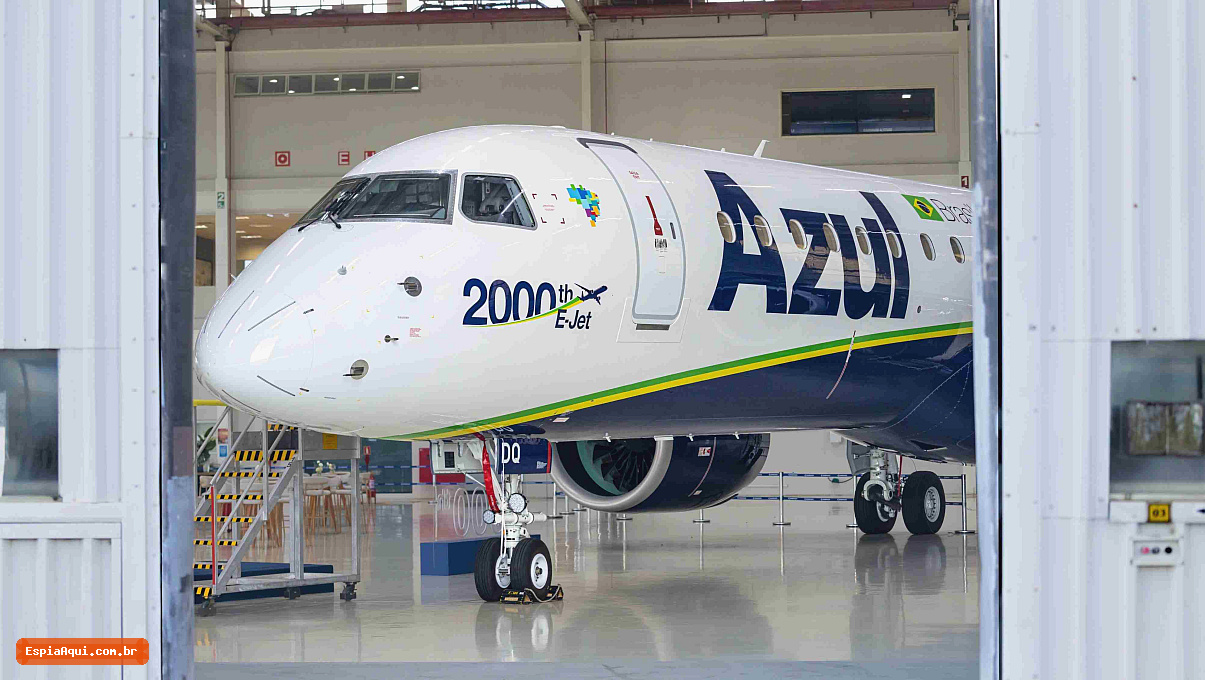
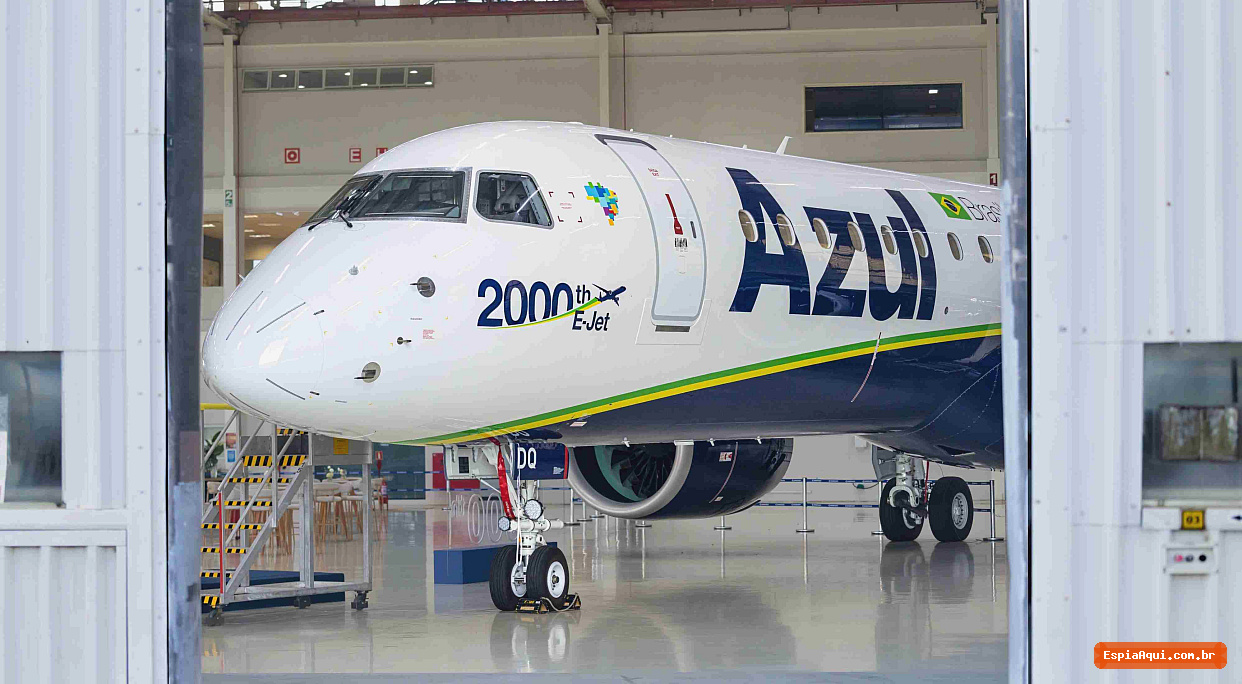
In early September, Embraer reached the milestone of 2,000 units delivered in the E-Jets family, handing over an E195-E2 to Azul. With this, the series ranks among the three best-selling in the world, behind only Airbus’s A320 family and Boeing’s 737.
Since its launch in 2004, the E-Jets line has operated in about 60 countries, serving more than 90 airlines and carrying more than 2.8 billion passengers. Arjan Meijer, president and CEO of Embraer, emphasized that the delivery of the 2,000th aircraft is an important milestone for the company and for global air transportation.
Embraer’s Growth and Challenges
Embraer, headquartered in São José dos Campos (SP), has been recognized by the market for its recent track record. The Economist magazine noted that this expansion comes amid the production difficulties faced by Airbus and Boeing, which are affecting aircraft supply.
the commercial aviation sector has been undergoing a reshaping, with Boeing facing crises such as those related to the 737 MAX and Airbus solidifying its leadership with the A320 line. The pandemic also led airlines to prefer smaller, more flexible aircraft, favoring Embraer.
Compared with Bombardier, the E-Jets family has surpassed the CRJ model in number of deliveries. According to The Economist, Embraer’s share price has risen about tenfold since early 2021, outpacing the gains of Airbus and Boeing.
The company’s projections indicate a jump in deliveries, from 141 aircraft in 2021 to 255 in 2026. In July, the firm order backlog hit a record US$ 34.5 billion, marking seven consecutive quarters of growth.
Factors Driving Performance
One of the main reasons for Embraer’s growth is the capacity constraints faced by its competitors, particularly in the supply chain. While Airbus and Boeing must wait up to ten years to deliver certain jets, Embraer can complete production of the E2 family in less than two years.
In the United States, the E175 holds a virtually exclusive position in regional aviation, being the only jet in its category in production that meets the labor restrictions of American airlines.
Beyond commercial aviation, Embraer has been advancing in sectors such as executive aviation and defense. The KC-390 Millennium cargo aircraft has boosted the Defense and Security segment, whose order backlog reached US$ 6.1 billion, up 42% from the second quarter of 2025.
Colombia recently acquired two KC-390 units, becoming the 13th country to operate the model. The largest international contract, valued at an estimated US$ 170 million to US$ 190 million per unit, was signed with the United Arab Emirates for ten cargo aircraft.
Outlook and Future Investments
India is emerging as a potential market for Embraer, which is competing to supply 60 to 80 KC-390 units and negotiating with the Adani group to bring the E175 into the local civilian market. The company is weighing the possibility of setting up a production line for the E-Jets family in the country, although it requires a minimum order of 200 aircraft to make the investment viable.
Another highlight is its subsidiary Eve Air Mobility, which is developing electric vertical takeoff and landing (eVTOL) aircraft. In August, the prototype successfully completed its first flight with a transition between vertical and horizontal modes.
Production Limitations and Challenges
Despite the progress, Embraer faces supply chain difficulties that constrain production. Its installed capacity allows it to assemble up to 105 commercial jets per year, but delays, especially with engines, limit deliveries to 80 or 85 units in 2026.
In addition to shortages of electronic components and forged parts, a lack of skilled labor is also affecting the pace of production. The company is still dealing with contracts signed during the pandemic that carry lower margins, which has led analysts to point out that the company’s biggest risk today lies in execution rather than demand.
Embraer is also grappling with higher material costs and external uncertainties, such as fluctuations in fuel prices and the need for external financing for its operations.
In light of this growth, the Brazilian manufacturer is studying the development of a new, larger single-aisle commercial jet, seeking to further expand its presence in the global market.