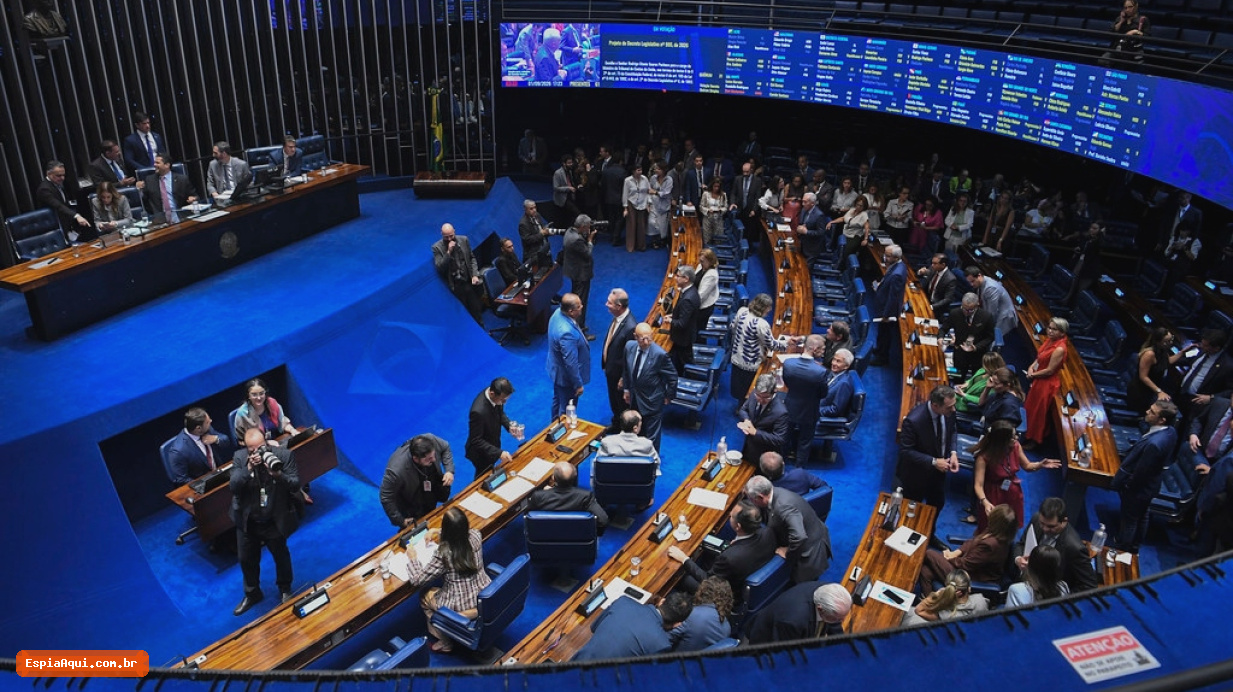
The Senate approved on Tuesday (the 1st) a bill establishing a special tax regime to encourage the installation of data centers in Brazil. The proposal, which now goes to President Luiz Inácio Lula da Silva for signature, eliminates the import tax on equipment and applies a zero rate to taxes on the export of services in the sector.
Named the Special Taxation Regime for Datacenter Services (Redata), the program replaces a previous provisional measure and imposes certain conditions for companies to access the tax benefits. Among them is the requirement to allocate at least 10% of data processing, storage and handling capacity to the domestic market.
companies must invest at least 2% of the value of the products acquired through the incentive in research and innovation projects related to the digital industry.
Environmental and Energy Requirements
Another important requirement is that companies secure their own electricity supply, either through contracts or self-generation, using renewable sources. During the vote, the Senate explicitly included the possibility of using hydroelectric, wind, solar, biomass and biogas power.
Redata also requires participating companies to publish sustainability reports on their facilities, containing the Water Usage Effectiveness (WUE) index and the energy sources used. This is essential because data centers need constant cooling systems, which result in high energy consumption.
The regime calls for the exclusive use of renewable or low-emission sources to produce energy for data centers. However, senators removed the requirement that these sources have a “reduced environmental impact,” allowing, for example, the use of hydroelectric power even if building the plants causes local damage.
Fiscal and Strategic Impact
According to the Receita Federal, the fiscal impact of the measure will be R$ 5.2 billion in 2026, falling to R$ 1 billion in 2027 and 2028 as new tax reform rules take effect.
The bill’s rapporteur, Senator Cid Gomes (PSB-CE), warned that the current dependence on infrastructure in the Northern Hemisphere for data processing poses risks to national sovereignty, in addition to hurting the competitiveness of Brazilian technology-based companies.
As an example of potential investment, Cid Gomes cited the TikTok project at the Pecém Industrial and Port Complex in Ceará, which calls for investments of R$ 230 billion split into four phases.
The approved tax regime seeks to make the country more attractive for major projects in the sector, while also ensuring that companies meet sustainability requirements and contribute to domestic technological development.