Method #2 on our list of ways Americans get paid to watch videos sits in an odd gap: it pays several times what a reward app does, the work is nearly identical, and almost nobody writes about it.
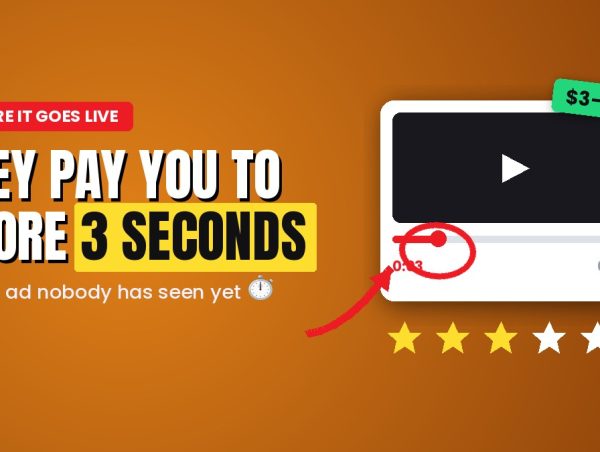
Before a brand spends seven figures putting an ad on television or in a feed, it pays a panel of ordinary people to watch the cut and score it. Did you understand what was being sold? Did you look away? What did you feel at second three? Sessions pay in the region of $3 to $15 and take 10 to 30 minutes.
How ad-rating works
The format varies by provider, but the shape is consistent:
- You join a consumer panel and complete a demographic and household profile.
- When a study opens that matches you, you get an invitation — usually by email or app notification, usually with a short window.
- You watch one or several ad cuts, often more than once.
- You answer structured questions: recall, comprehension, brand attribution, purchase intent. Some studies track where your cursor or eyes go.
- Payment is credited after the study closes, typically to PayPal or as a gift card.
It is genuinely easy work. There is nothing to prepare and no way to be wrong — a confused reaction is as valuable as an enthusiastic one, which is the entire point of testing before launch.
What it pays, and why the range is so wide
The $3–$15 spread is not about effort. A 10-minute study can pay more than a 30-minute one. The rate tracks how hard the brand’s target audience is to find.
- Mass-market consumer ads (food, retail, telecoms) need thousands of respondents. Low rate, frequent invitations.
- Category-specific ads (a particular car segment, a financial product, a prescription brand) need people who actually buy that thing. Higher rate, rarer invitations.
- Business ads need people with buying authority at work. Highest rate, and these shade into the $50–$150 research interviews on our list.
The profile answer that decides which pool you land in
Everyone fills in age, gender and ZIP code. Those place you in the mass-market pool, where the rate is lowest and the competition for each study is highest.
The field that actually sorts you is the one most people skim: recent and upcoming purchases, sometimes labelled “category involvement” or “shopping intentions.”
Advertisers are not testing on people in general. They are testing on people about to buy in their category — because those are the only reactions that predict anything. So the answers that matter are the specific, time-bound ones:
- Categories you have bought in within the last 6 months — not categories you like.
- Categories you are planning to buy in within the next 6 to 12 months. A car, an appliance, insurance, a holiday, a phone plan.
- Brands you currently use by name, including the ones you are unhappy with. “Recently switched” and “considering switching” are two of the most sought-after flags in the entire industry.
- Who in your household decides. Being the decision-maker for a category is worth more than using the product.
Fill these in honestly and keep them current. A profile updated once a year describes a person who no longer exists, and the matching engine treats it accordingly.
Three things that get you dropped
🚩 Straight-lining the questions
Selecting the same answer down a whole grid is detected automatically and voids the response. If an ad left you indifferent, say so with the scale, but read each question.
🚩 Answering impossibly fast
Studies record time per screen. Completing a 12-minute study in four minutes flags the response as low quality, and repeat flags remove you from the panel.
🚩 Claiming every category
Ticking every box to see more studies does the opposite. Attention-check questions are built into screeners specifically to catch it, and failing them is the most common reason people quietly stop receiving invitations.
Your first month
- Week 1: Join two or three consumer panels. Complete every profile section, especially purchase intentions.
- Week 2: Turn on notifications. Invitations expire fast and are usually first-come.
- Week 3–4: Take whatever arrives, carefully. Early response quality shapes how often you are invited later.
- Every quarter: Revisit your purchase intentions. This is the single highest-value maintenance task.
Is it worth it?
It pays roughly ten to twenty times better per hour than reward apps, for work that feels the same. The catch is frequency: invitations arrive when a study happens to need someone like you, which you cannot control.
That makes it a good second layer rather than a base. Most people who stick with it pair it with website tests, which arrive far more predictably at a similar or better rate.
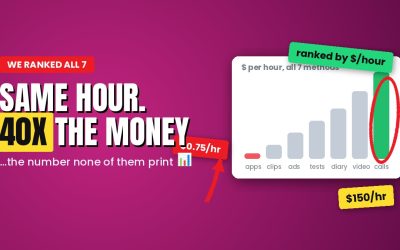
Where it sits against everything else: all seven methods ranked by hourly pay.
Rates shown are published or self-reported figures and are not a guarantee of earnings. This article is for informational purposes only and does not constitute financial advice.