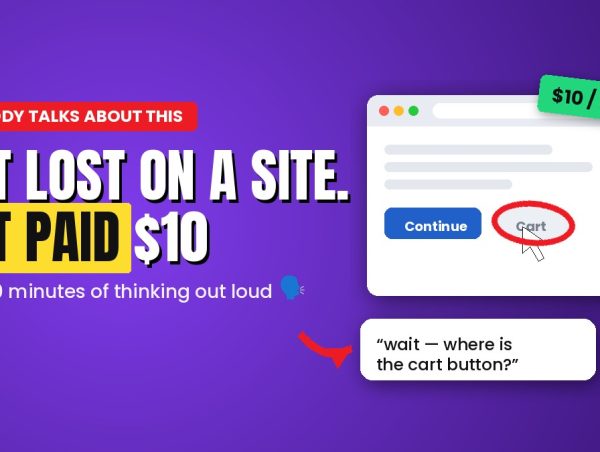
Method #3 on our list of ways Americans get paid to watch videos is the one that surprised us, because it isn’t an app and it isn’t passive. You watch a screen, use a website, and say out loud what confuses you. Companies pay for that because it is cheaper than guessing why their checkout page leaks customers.
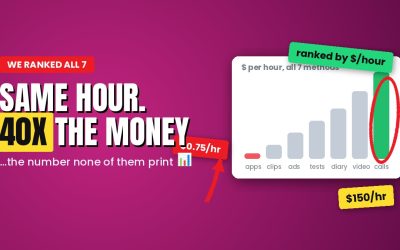
UserTesting publishes a rate of $10 for a 20-minute test. Userbrain publishes $5 for tests running 5 to 20 minutes. Compared to the reward apps in method #1 — where a realistic ceiling is about $30 a month — the gap is roughly 40x per hour worked.
The work is easy. Getting accepted is the hard part, and almost all of the difficulty sits in one 90-second step most people fail without ever being told why.
How a paid website test actually works
The format is nearly identical across platforms:
- A company submits a website, app or prototype and a list of tasks (“find a refund policy”, “buy a pair of running shoes under $80”).
- You get a notification that a test matching your profile is open. These go fast.
- You share your screen, turn on your microphone, and work through the tasks while narrating every thought.
- You answer a few written follow-up questions.
- The researcher reviews the recording. Approved tests pay out on the platform’s cycle.
You are not being tested. The website is. Saying “I have no idea what this button does” is exactly the product they are buying.
What it pays, and when the money arrives
| Platform | Published rate | Payout |
| UserTesting | $10 per 20-minute test | PayPal, roughly 14 days after approval |
| Userbrain | $5 per test (5–20 min) | PayPal, once you reach $10 |
| Trymata | Varies by study | PayPal, weekdays after approval |
| Userlytics | Varies by study | PayPal, roughly every 15 days |
Only UserTesting and Userbrain publish their rates openly. Figures circulating for the others come from testers, not from the companies, so treat them as indicative rather than promised.
Realistically: most testers see a handful of tests per week, not per day. This is grocery money that pays well per hour, not a replacement income. Anyone promising otherwise is selling something.
The 90-second audio check that disqualifies most new testers
Every platform makes you record a short practice test before you can take a paid one. Almost everyone treats it as a formality. It is the single filter that decides whether you ever get work.
What the reviewer is checking is not your opinion. It is three mechanical things:
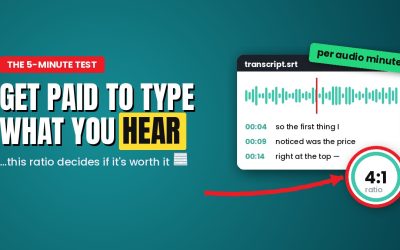
- Continuous speech. Silence is the number-one rejection reason. If you go quiet for ten seconds while reading, the recording is worthless to a researcher. You must narrate even the boring parts: “I’m scanning the menu now, I’m looking for anything that says pricing.”
- Clean audio. Laptop mics pick up fans, keyboards and room echo. A $15 wired headset with a boom mic is the single highest-ROI purchase here. No background TV, no pets, no open window.
- Reaction, not description. “There’s a blue button” is a description. “There’s a blue button but I expected the cart to be top-right, so I missed it” is a reaction. Only the second one has value.
Record your practice test twice and listen back before submitting. Most people never hear how long their own silences are.
Why you might get accepted and still never get a test
Acceptance gets you into the pool. Invitations are matched to demographics. Two things decide how many you see:
- Speed. Tests are claimed first-come. Mobile notifications on, and you take them when they arrive, not later.
- Profile completeness. Studies filter on job role, industry, household income bracket, devices owned, and software used. An empty profile matches nothing. Fill in every field honestly — the screening questions at the start of each test re-check your answers, and inconsistency removes you from the platform.
Three things that get tests rejected after you’ve done the work
🚩 Finishing far too fast
A 20-minute test completed in 7 minutes reads as low effort and usually fails review. Work at a natural pace.
🚩 Skipping a task
If you genuinely cannot complete a step, say so out loud and explain why. Silently moving on is treated as an incomplete recording.
🚩 Treating it like a survey
Short yes/no answers to the written follow-ups invite rejection. Two or three sentences each is the norm.
Your first week
- Day 1: Sign up for UserTesting and Userbrain. Buy or dig out a wired headset.
- Day 2: Fill both profiles completely — every optional field included.
- Day 3: Record your practice test. Listen back. Re-record if you hear silences longer than about five seconds.
- Days 4–7: Turn on notifications and claim anything that appears. Your first payment lands roughly two weeks after your first approved test.
Is it worth it?
Per hour, it is among the best-paying things on our list. Per month, it is limited by how many invitations you receive — which is why most people who stay with it also sit on the research interview platforms that pay $50–$150 a session, where the sessions are longer but far less frequent.
If you want to see where this sits against every other method, we ranked all seven by realistic hourly rate: the full comparison is here. If you’d rather start with something that pays this week, the reward-app route is faster to a first dollar, and much smaller.
Rates shown are published or self-reported figures and are not a guarantee of earnings. This article is for informational purposes only and does not constitute financial advice.