
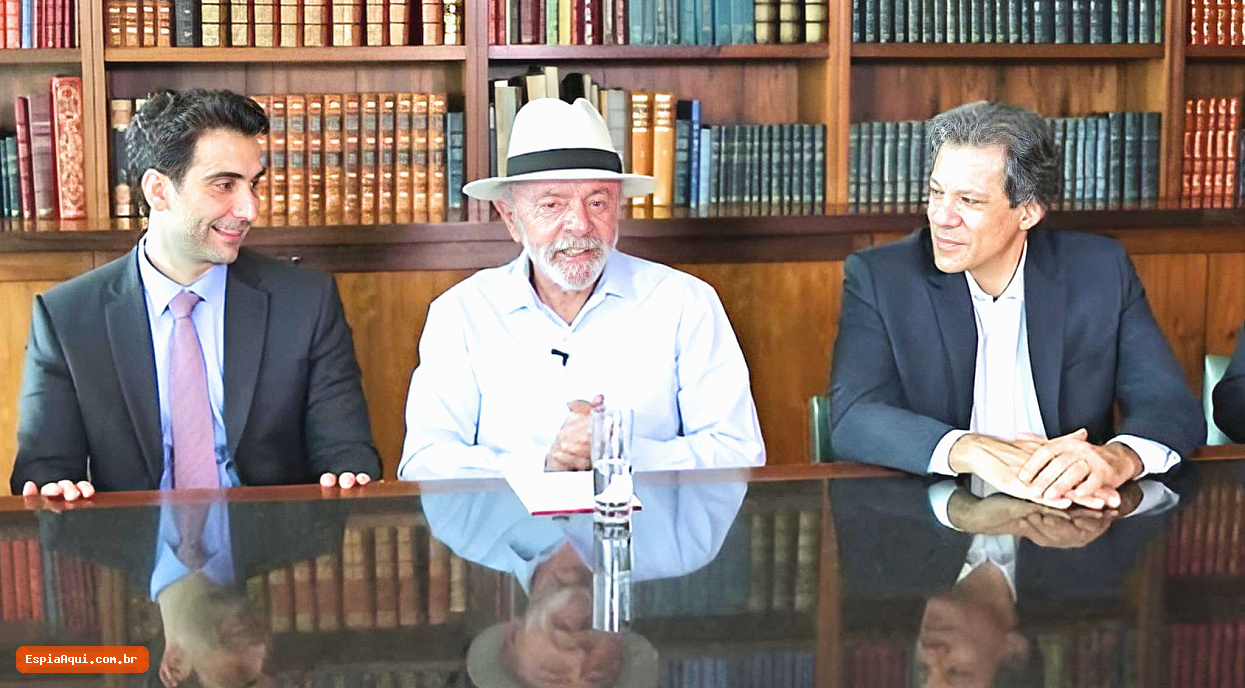
Privately, President Luiz Inácio Lula da Silva considers Gabriel Galípolo, whom he appointed to head the Central Bank (BC), the biggest disappointment of his political career. His dissatisfaction stems from the slow pace of Selic rate cuts during the election year and from Galípolo’s defense of former heads of the monetary authority in the Banco Master case.
Publicly, Lula has said he is “sad and frustrated” that interest rates remain high. According to Poder360, he went as far as telling associates that he felt betrayed by Galípolo, even more so than by former Finance Minister Antonio Palocci, who claimed to have heard about bribes involving the president during the Car Wash (Lava Jato) investigation.
Before taking the helm of the BC in January 2025, Galípolo served as coordinator of Lula’s economic campaign in the 2022 elections, was executive secretary of the Finance Ministry and director of Monetary Policy at the Central Bank.
In February 2025, Lula said in an interview with a radio station in Amapá that he trusted Galípolo’s work to correct the interest rate, stressing the need to allow time for the measures to be implemented.
Selic Rate and Public Pressure
When Galípolo took office, the Selic stood at 12.25%. After rising to 15%, the rate was reduced to 13.75% a year on September 16, 2026, with a 0.25 percentage point cut.
Despite his criticism of the current leadership, Lula had already publicly pressed Roberto Campos Neto, his predecessor appointed by Jair Bolsonaro, to lower interest rates, linking the high Selic to an attempt to destabilize his government.
However, the Selic decision is made by the Monetary Policy Committee (Copom), which bases its decisions on economic conditions and the inflation outlook. Copom justifies high interest rates as necessary to contain inflationary pressure and keep inflation within the target.
On August 31, during a dinner with bankers and business leaders at the Palácio da Alvorada, Lula denied that he considers Galípolo a traitor but reaffirmed his displeasure with high interest rates, acknowledging the BC president’s mandate and the need to respect it.
Internal Reactions and Criticism from Allies
Among allies, the dissatisfaction is evident. Guilherme Boulos, chief minister of the Secretariat-General of the Presidency and a member of PSOL, said the Selic is being cut at a “snail’s pace” and that the BC’s autonomy limits the elected president’s ability to steer economic policy in line with the platform approved at the polls.
José Dirceu, a former minister and close ally of Lula, also criticized the handling of the rate, suggesting the decision was politicized and questioning the rationale for the current Selic.
It is worth noting that the BC directors who sit on Copom were appointed by the Lula government.
Involvement in the Banco Master Case
Another source of discontent was Galípolo’s role in the Banco Master scandal. The PT tried to link Roberto Campos Neto to Daniel Vorcaro, the institution’s former owner, in order to blame the Bolsonaro government for the bank’s growth and frauds.
However, at the CPI (congressional inquiry) on Organized Crime, Galípolo defended Campos Neto, stating that there are no audits or investigations holding him responsible.
Interest Rate Context and Economic Challenges
Even with the recent cuts, in August 2026 Brazil had the world’s second-highest real interest rate, at 9.33% a year, behind only Russia (9.67%), according to data from MoneYou.
Throughout the year, Copom has noted that slipping fiscal discipline, doubts about stabilizing public debt and the growth of directed credit are keeping interest rates high. The neutral rate, which neither stimulates nor slows the economy, has been rising.
Economist Gustavo Sung of Suno Research points out that factors such as the election calendar, the El Niño phenomenon, persistent services prices and oil above US$ 100 a barrel make further Selic cuts difficult in the coming months.
Market Pressure and a Divergent Diagnosis
Besides the Planalto, the market is also calling for lower interest rates, but blames the problem on fiscal imbalance and slow structural reforms rather than on any politicization of the Central Bank.
André Esteves, chairman of BTG Pactual, said at an event in São Paulo that progress on macroeconomic stability depends on bringing rates down to levels considered “civilized.” According to him, this matters more than social programs, government policies or even increased investment.