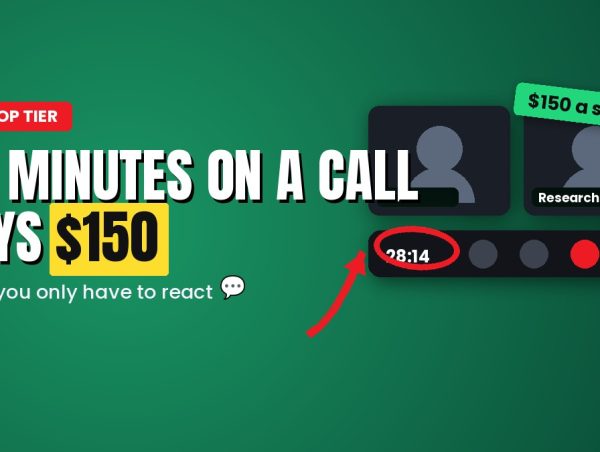
Method #4 on our list of ways Americans get paid to watch videos is the same idea as a website test, one tier up. Instead of a recorded solo session, a researcher is on the call with you. You watch stimulus material — an ad, a prototype, packaging, a competitor’s app — and react in real time while they ask follow-ups.
Respondent publishes rates of $50 to $400+ for sessions running 30 minutes to two hours. In-person focus groups average $150–$250. That is a day’s wage for an afternoon, which is why these are the hardest invitations to get.
How paid interviews work
A company — usually a software firm, a bank, a healthcare brand or an agency working for one — needs to hear from a specific kind of person. Not “anyone”, but “operations managers at logistics companies with 50–200 employees who switched vendors in the last year.”
The flow:
- You build a profile describing your job, industry, tools and household.
- A study opens and you complete a short screener — usually 5 to 10 questions.
- If you match, you book a slot on the researcher’s calendar.
- You attend a video call, react to what they show you, and answer questions.
- Payment is released after the researcher approves the session, typically via PayPal.
There is no preparation and no right answer. They are buying your reaction, not your expertise.
What moves your rate
Rates are set by the company, and they are set by how hard you are to find. This is the whole economics of the category:
| Who you are | Typical published range |
| General consumer | $50–$75 per 30–60 min |
| Professional in a named role | $100–$200 per session |
| Specialist decision-maker (IT, finance, clinical, procurement) | $200–$400+ |
| In-person focus group | $150–$250 average |
A consumer study wants thousands of people and pays accordingly. A study that needs twelve hospital procurement managers in the United States pays whatever it takes to find twelve of them.
The job title that doubles your rate
Here is the detail that matters, and it is not what people assume.
It isn’t seniority. “Director” does not pay more than “Manager.” What pays is being the person who chooses or approves a purchase in a field with few participants. A mid-level IT administrator who decides which security software gets bought is worth several times more to a researcher than a VP who approves budgets in general.
So when you fill in your profile, the useful specificity is:
- The category you influence — software, equipment, suppliers, insurance, materials.
- Your company size band, which is almost always a screening criterion.
- The specific tools you use by name, not the category. “Salesforce, HubSpot, Zendesk” matches studies; “CRM software” matches nothing.
- Whether you have switched vendors recently. Studies hunt for switchers constantly.
Most people leave these blank or write them vaguely, then conclude the platform has no work.
Why inflating your title gets you removed permanently
The temptation is obvious: claim the higher-paying role and collect. It does not work, for a reason that isn’t obvious.
The screener is not the check. The interview is the check. A researcher who has run forty sessions with procurement managers knows within four minutes that you have never seen a purchase order workflow. The session gets voided, you are not paid for the time you already spent, and platforms routinely remove the account rather than issue a warning — because a company that got a fake participant will not come back.
The cost of being caught is the account, not the session. Over any reasonable horizon, honest profiles earn more because they keep receiving invitations.
Three reasons sessions get cancelled
🚩 Inconsistent screener answers
Platforms compare your screener responses against your profile and against your previous screeners. Contradictions flag the account.
🚩 No-shows
A missed slot is expensive for the researcher and is the fastest route to being deprioritised. Cancel at least 24 hours ahead if you must.
🚩 Bad call conditions
These sessions are recorded for stakeholders. A frozen camera, a noisy room or a phone held in one hand can get a session voided. Wired internet and a headset, every time.
Your first month
- Week 1: Build a complete profile with named tools and your real decision scope. Expect no invitations yet.
- Week 2: Complete every screener that appears, even ones you suspect you won’t match. Screener completion rate affects visibility.
- Week 3–4: Your first session typically lands here. Payment follows researcher approval.
Invitations are infrequent by nature. Almost everyone who does this seriously also runs the faster, smaller methods alongside it.
Is it worth it?
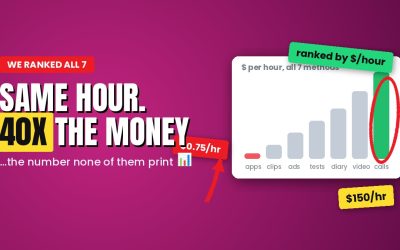
Per hour, it is the best-paying method on our list by a wide margin. Per month, it is the least predictable. The sensible structure is to treat interviews as the upside and something steadier as the base — most people pair it with website tests at $10 per 20 minutes, which arrive far more often.
If you want to see where every method lands on a per-hour basis before committing your time, we ranked all seven here. And if filmed, multi-day studies appeal more than live calls, video missions and diary studies pay in a similar band.
Rates shown are published or self-reported figures and are not a guarantee of earnings. This article is for informational purposes only and does not constitute financial advice.