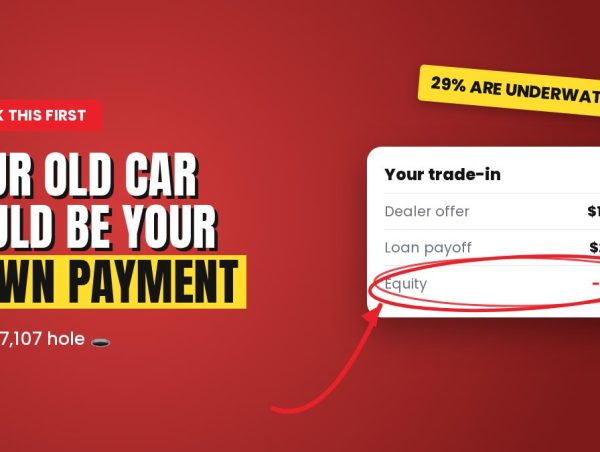
If you already own a car, our guide to buying a car with $0 down in 2026 starts with a question most buyers skip: is your car worth more than what you owe on it?
If it is, the difference is your down payment, and you don’t need to put in any cash. If it isn’t, you are “underwater”, and the dealer will offer to add the difference to your new loan. About 29% of buyers who traded in a car toward a new one in the third quarter of 2026 were in that situation, with an average of $7,107 of negative equity, according to Edmunds figures reported by the trade press.
Check your equity in five minutes
- Ask your lender for the payoff amount, not the balance on your statement.
- Get real offers for your car, not estimates: CarMax, Carvana and other dealers will quote online in minutes.
- Subtract. Value minus payoff is your equity. If it’s positive, that is your down payment.
Get these offers before you go to the dealer you’re buying from. A dealer that knows your trade-in value can give you a good price on one side and take it back on the other.
What happens when you roll negative equity in
Edmunds looked at buyers who did it in the third quarter of 2026: they financed $57,235 on average, paid $952 a month at 8.1% APR, and 91% took 72 months or longer. The Consumer Financial Protection Bureau found that borrowers who rolled negative equity into a new loan were more than twice as likely to have the car repossessed within two years.
There is also a tax cost now: the interest on rolled-in negative equity does not count for the new car-loan interest deduction.
Better options if you’re underwater
- Keep the car a few more months and pay extra toward the principal.
- Sell it privately. A private sale usually brings more than a trade-in.
- Choose a cheaper car so the total loan stays close to the new car’s value.
- Look for cash rebates that can cover part of the gap.
GAP insurance: the product $0 down needs
With no money down, you owe more than the car is worth from the day you drive it, because a new car loses about 20% of its value in the first year. If it’s totaled or stolen, insurance pays the car’s value, not your loan. GAP insurance covers the difference.
Where you buy it matters. Dealers commonly charge several hundred dollars for GAP and add it to the loan, so you pay interest on it. Many car insurers sell it as an add-on to your policy for much less, often a few dollars a month. Ask your insurer before you sign.
Offers, rates and rules are those published by each automaker, lender or agency as of November 2026 and can change at any time; manufacturer offers usually end with the month and vary by region. Approval and your rate depend on your credit. This article is for information only and is not financial or tax advice.