AI voices have gotten remarkably good. Tools like ElevenLabs can produce narration that many listeners can’t tell apart from a human — which has opened a new faceless side hustle: producing audio for authors, course creators and businesses.
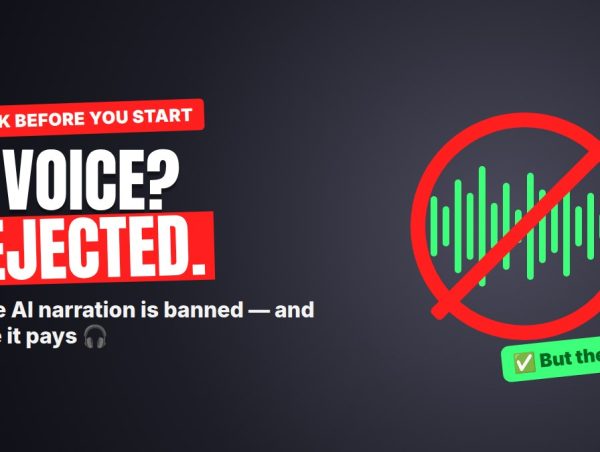
But there’s a trap. Some of the biggest audiobook stores reject AI-narrated audio. Take on the wrong project and your client’s book never goes live.
Here’s where AI narration is accepted, where it isn’t, and where the easiest clients are.
Audiobook platforms: the 2026 picture
| Platform | AI narration from outside tools? | Notes |
|---|---|---|
| ACX (Audible) | ❌ No | Requires human narration. Audible offers its own in-house AI “Virtual Voice” program for some KDP authors — that’s different from uploading your own AI audio. |
| Apple Books | ✅ Yes | AI narration must be disclosed. |
| Spotify for Authors | ✅ Yes | Accepts AI-narrated titles through its submission portal. |
| Voices by INaudio | ✅ Yes | Distributes to many retailers; check which ones accept AI titles. |
| Google Play Books | ⚠️ Check first | Confirm current rules before submitting. |
| Kobo | ⚠️ Check first | Policies have changed; verify before submitting. |
| Chirp (BookBub) | ❌ No promos | AI-narrated titles aren’t eligible for its deals. |
Always double-check each platform’s current terms before starting a project. These rules change often.
The easier money: outside of audiobooks
Audiobooks get the attention, but many narration jobs have far fewer restrictions:
- Online courses: creators on Teachable, Kajabi or Udemy-style platforms need clean voiceovers for lessons.
- Corporate training: companies need onboarding and safety videos narrated — often in several languages.
- YouTube channels: faceless channels need consistent narration for every video.
- Explainer videos and ads: short scripts, fast turnaround.
- Translations: turning an English course into Spanish or Portuguese audio is a high-value service.
For these, the client cares about one thing: does it sound good and correct?
What clients are really paying for
Anyone can paste text into an AI voice tool. What people pay for is the producer’s work:
- Fixing mispronounced names, brands and technical terms
- Adjusting pacing and pauses so it doesn’t sound robotic
- Keeping the same voice and volume across every file
- Delivering files in the format and specs the client needs
- Adding light music or cleaning up the final mix when needed
That’s the detail that separates a $20 gig from a $300 project.
Rules you must follow
- Use only voices you’re licensed to use commercially. Check your plan — free tiers often don’t include commercial rights.
- Never clone a real person’s voice without written consent.
- Disclose AI narration wherever the platform or client requires it.
- Get the client’s rights to the text. They must own or license the book or script.
How to price it
| Project | Common range |
|---|---|
| Short video voiceover (under 2 min) | $20–$75 |
| Course module (30–60 min of audio) | $75–$250 |
| Full book (per finished hour) | $30–$100 |
| Translation + narration | Priced higher — includes script review |
Where to find clients
- Fiverr and Upwork: search “AI voiceover” and “course narration” to see demand.
- Course creators: find creators on YouTube and LinkedIn whose courses have no voiceover, and offer a free 1-minute sample.
- Indie authors: writing communities and author Facebook groups — but be clear about which stores accept AI audio.
Prices are typical market ranges, not guarantees. Platform policies can change — confirm them before each project.